
 BACK TO BLOG
 How Was the Copper Dome on Raleigh’s Holy Name of Jesus Cathedral Built?
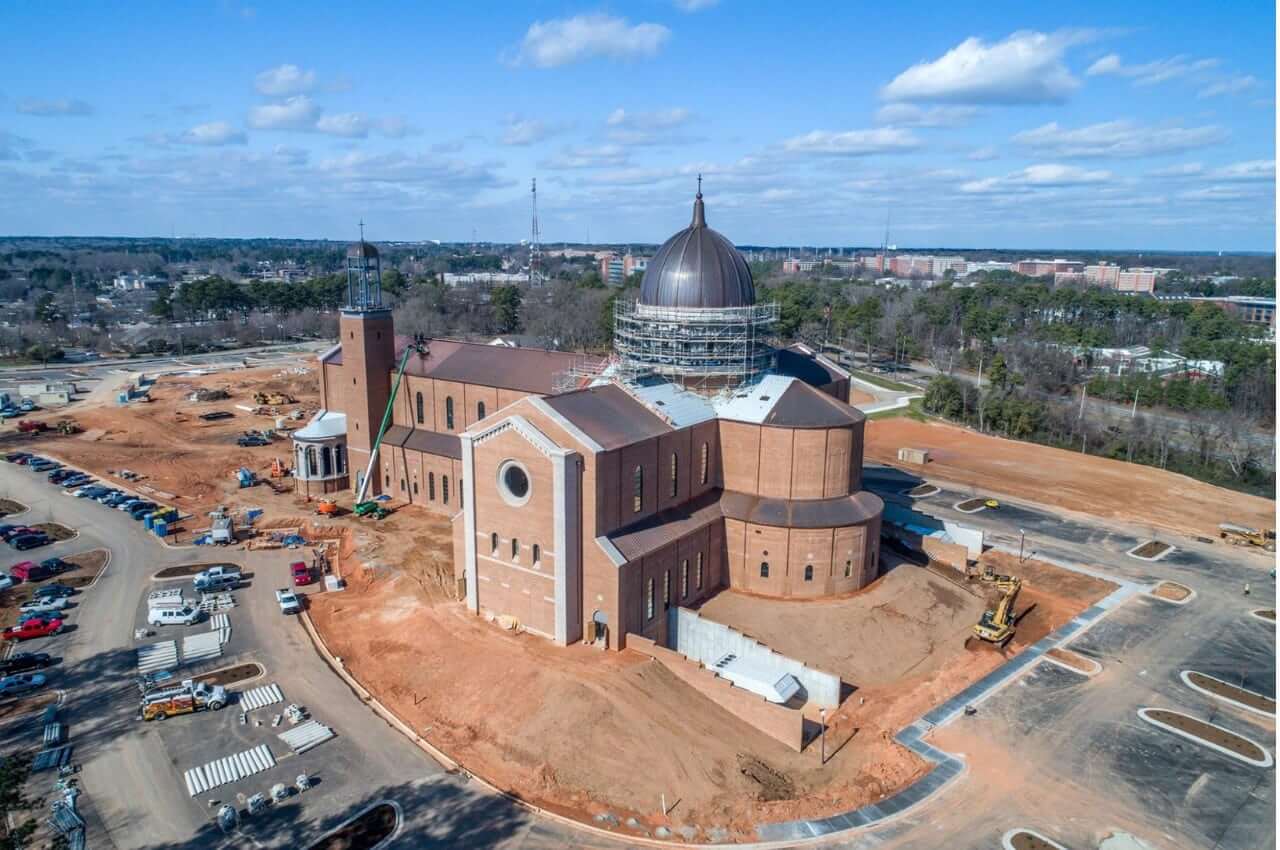
The copper dome and roof on the Holy Name of Jesus Cathedral in West Raleigh were fabricated and installed by our crews, then the finished 160-ton dome was hoisted nearly 90 feet into the air and set atop the cathedral in a single lift. We were selected for the work by the general contractor, Clancy & Theys, and we shaped and installed every copper panel that wraps the dome and roof. For us, it was a rare chance to do good work on a landmark in our own backyard, the city where our company began in 1915.
A Cathedral a Century in the Making
In January 2015, the Catholic Diocese of Raleigh broke ground on a roughly $41 million project in West Raleigh, realizing a long-held vision to build the first purpose-built cathedral in North Carolina. The groundbreaking drew hundreds of parishioners to the future site. More than 22,000 donors across the 55-county diocese had pledged support through a fundraising campaign launched in 2011, contributing tens of millions of dollars toward construction.
When the time came to choose a roofing contractor for one of the building’s most demanding features, Clancy & Theys turned to us. The assignment was the copper that would clad both the dome and the roof, the most visible surfaces on the entire structure.
What Made Roofing the Dome So Challenging?
The dome could not be roofed in place. It had to be built and fully roofed on the ground, and only then lifted as a finished unit to the top of the cathedral. That meant the copper work had to be precise enough to withstand a 160-ton structure being raised almost 90 feet into the air and lowered onto its framework.
Here is what the project involved at a glance:
- A dome standing 88 feet tall and weighing close to 320,000 pounds, built and roofed at ground level
- Copper panels fabricated and installed by our own crews to clad the dome and roof
- A specialized crane, supplied and operated by Buckner Companies, was assembled on-site for the lift
- A single lift of roughly an hour to raise the dome and secure it to the cathedral structure
- An 11-foot, 50-pound copper cross set at the very top, 170 feet from the ground
Once the dome was in place, the copper cross was prepared for its own trip skyward. Bishop Michael Burbidge, joined by Monsignor David Brockman and Monsignor Gerald Lewis, blessed the cross with holy water before it was lifted. Two of the craftspeople who fabricated the cross escorted it to the peak of the dome, where it was installed at the highest point of the cathedral.
A Landmark You Can See for Miles
Since it was set into place, the copper dome has been visible across West Raleigh, a quiet daily reminder of careful work done well. The cathedral was built to serve about 2,000 worshippers at a time, a substantial increase over the seating that had been available at the city’s previous cathedral.
We were honored to play our part. As Prentiss Baker put it, we are always glad to work alongside Clancy & Theys, and we felt especially humbled to be chosen as the roofing contractor for a project of this significance so close to home.
A job like this reflects how we have approached our work for more than 110 years. We self-perform with our own crews, which keeps quality and accountability in our hands from the first panel to the final cross. As a 100% employee-owned company today, every person on the crew has a direct stake in getting the details right, and that ownership shows up in the work.
Building Something That Lasts
A copper roof is meant to stand for generations, and so is the relationship behind it. Whether your project is a single building or a landmark meant to serve a community for a century, we would be glad to take a look and build a plan that lasts. Let us partner with you on what comes next.
Related Insights
 Roofing Insights
Why Every Brick Wall Needs Weep Holes and Through-Wall Flashing

Moisture is your building’s silent enemy. When rainwater infiltrates your brickwork or condensation gets trapped behind a window, you risk mold and mildew growth,…
 Roofing Systems
Roof Coping: Everything You Need to Know
If your property has a flat roof (or even certain forms of sloped roof), a parapet wall probably sits atop it. Parapet walls are the short…
 Roofing Insights
The Story Behind Always Good Work
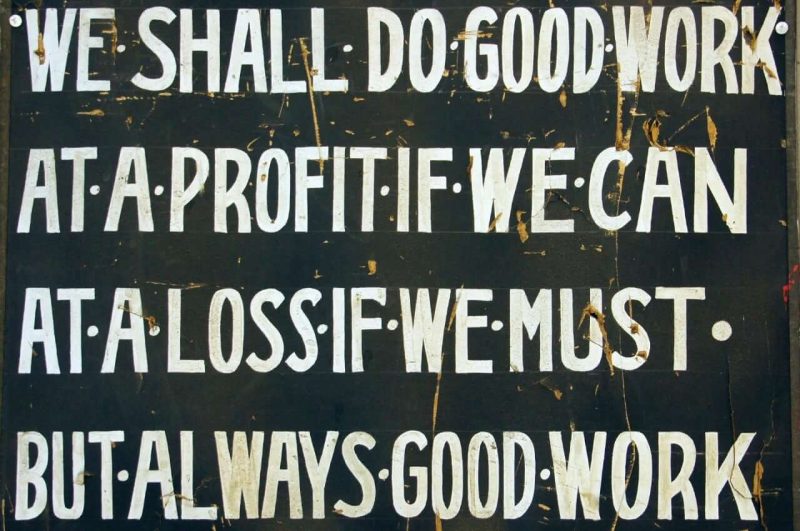
We shall do good work. At a profit if we can, at a loss if we must, but always good work. For more than…