4 Questions You Should Ask a Roofing Contractor Before Starting Your Project

male roofer in safety assessing a shingle roof

Getting roofing repairs done can be nerve-wracking, especially for first-time homeowners. After all, your home is your most significant investment and you don’t want a total stranger to do a botched job and damage your home. However, doing the job yourself may lead to injuries, especially if you don’t know what you are supposed to do. You will need to rely on the services of a professional roofing contractor.

For your peace of mind, here are four questions that you need to ask a roofing contractor before signing a contract.

  1. Are you a licensed roofing contractor? The first thing you need to ask a roofing contractor is if they have the necessary license to practice in the state. Most states require licensing from contractors, although that doesn’t stop unlicensed contractors from doing roofing work, roofing is regulated by the government. Having a license means the contractor has the credibility, knowledge, and expertise to practice the profession. Most states have a website where you can input a contractor’s license number and check their status. If a roofing contractor fails to give their license, you need to think twice before hiring them.
  2. Do you have the applicable insurance? There will always be a risk of injury in any home improvement and repair work, but even more so in roofing projects. As such, ensuring that the contractor has the necessary insurance protects both you and the contractor should an accident happen during the job. Ask if the roofing contractor has general liability insurance and workers’ comp insurance. General liability insurance protects you in case your property is damaged while workers’ comp insurance ensures that you will not be liable for medical expenses in case the contractor is injured on the job. Most states require contractors to have general liability insurance as it also protects the contractor from claims against their work.
  3. May I see your references? One of the best ways to gauge a roofing contractor’s experience and ability is to check their past work. Ask the roofing contractor to provide a list of their previous clients, who you can then visit or talk to and ask about their experience. If they are satisfied with the work, then you can rest assured of the contractor’s ability. Some of the questions you can ask previous clients include:
    • Was the job finished on time?
    • Were there any mistakes? How were they addressed?
    • Were there any changes from the initial plan?
    • Were you satisfied with the work?
    • Do you recommend the contractor to others?
  4. How do you want to get paid? Unclear payment terms can be a real headache at the end of a project. So before any payment issue arises, ask the roofing contractor about the payment structure they prefer. Ask the contractor how much the project will cost and the amount they want to be paid upfront. Additionally, ask if they want to be paid based on time or based on milestones. Clarify all of these before the roofing project starts. Looking for a reliable roofing contractor is a challenging task. So take note of these important questions that you need to ask potential contractors. If their answer is satisfactory, then you can rest assured that your roofing project will proceed smoothly.
About the Author: Patrick Hogan is the CEO of Handle.com, where they build software that helps contractors, subcontractors, and material suppliers with late payments. Handle.com also provides funding for construction businesses in the form of invoice factoring, material supply trade credit, and mechanics lien purchasing.

Waterhead

A box-shaped component that connects scuppers to downspouts, helping control the flow of roof runoff and avoiding unsightly cascades. Waterheads are also called conductor heads or rainheads.

Expansion Joints

Flexible joints built into a roof system that absorb movement from expansion and contraction. They prevent cracking and leaks at connections between different parts of your roof assembly.

Drip Edge

An L-shaped piece of roof edge flashing that helps rainwater flow off the roof and away from the fascia boards. It prevents water from seeping under shingles or other roofing materials, protecting the roof deck from rot.

Capillary Action

The process where water moves into tiny gaps or along narrow spaces, often against gravity, because of surface tension. In roofing, it can draw water into seams or cut edges, leading to hidden leaks and damage.

Membrane

The waterproof layer in a roofing system that protects the building from water intrusion and reflects sunlight, lowering energy costs. It’s usually the top layer of the roofing system and can be made of materials like TPO, PVC, EPDM, or modified bitumen.

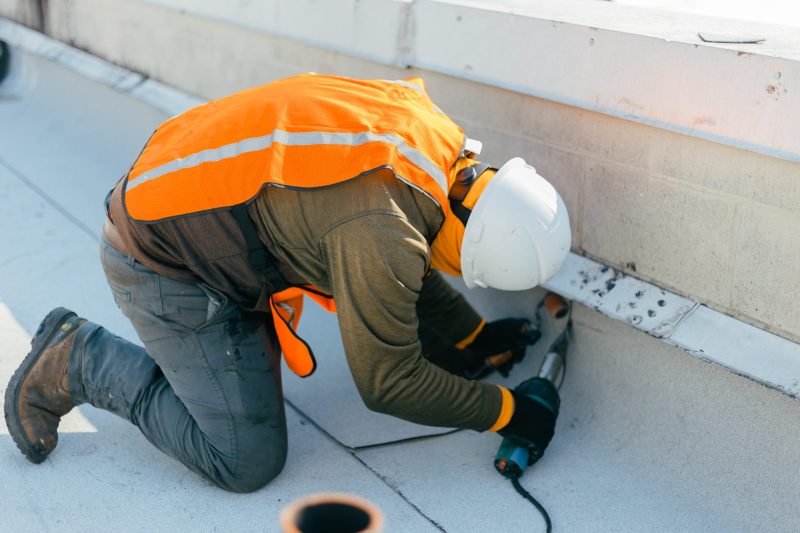
Heat welded thermoplastic membrane

A type of white single-ply roofing membrane that’s sealed at the seams using hot air, creating a waterproof layer over the roof. It’s commonly used on flat or low-slope commercial buildings, since these roofs need to most protection from water infiltration.

EPDM (ethylene propylene diene monomer)

A black, gray or white rubber roofing membrane known for its long lifespan. It’s commonly used on flat or low-slope buildings and is typically glued down, mechanically fastened or ballasted, not heat-welded.

PVC (polyvinyl chloride)

A high-end type of heat-welded thermoplastic membrane that stands up well to oils and chemicals. It’s ideal for restaurants or industrial buildings for its extra resistance, though it usually costs more.

TPO (thermoplastic olefin)

A durable type of heat-welded thermoplastic membrane that reflects sunlight and helps reduce cooling costs. It’s a cost-effective option for flat roofs but may not perform as well as PVC in harsh environments.

End cap

A metal cap that seals the open end of gutters, flashings, or panels. End caps prevent water from spilling and protect roof edges from corrosion or leaks.

Soldered joint

A watertight joint created by joining metal roofing or flashing components together. Soldered joints provide long-lasting, durable seals against water infiltration.

Parapet wall

The short wall that extends above the roofline, often around the roof’s edge, to provide safety, block wind, and in some cases help manage water drainage. In roofing, parapet walls are usually capped with coping to keep water from seeping into the wall structure.

Retro drain

A roof drain retrofit designed to fit inside existing piping without major demolition. Retro drains are cost-effective solutions for improving drainage on older roofs.