
 BACK TO BLOG
 What does a roofer look for when assessing the condition of a roof?
During a professional roof inspection, a roofer evaluates five things: the visible condition of the membrane, evidence of moisture intrusion, the structural integrity of the deck beneath, the roof’s age and maintenance history, and opportunities to improve energy efficiency. Together, those five factors determine whether your roof needs a repair, a replacement, or simply a plan.
If you are weighing that repair-or-replace decision, understanding what the inspector is actually looking for helps you ask better questions and judge the quality of the answer you get. Here is what a thorough assessment covers.
1. What Does the Membrane Itself Reveal?
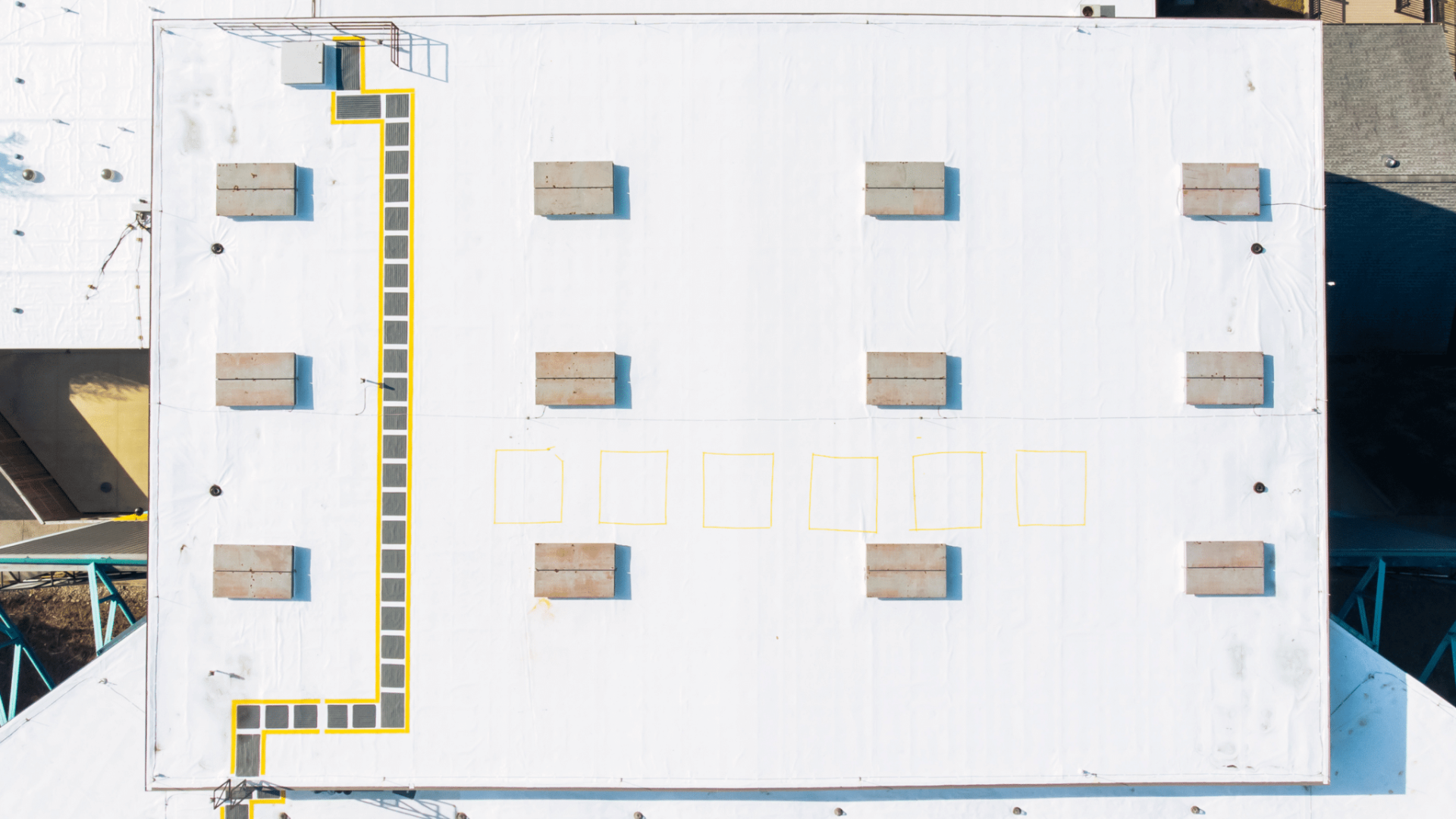
The inspection starts with a careful walk of the entire roof surface. The inspector is looking for cracks, blisters, punctures, open seams, and areas where the membrane is pulling away or bridging at corners and curbs. Just as important as finding these problems is reading their pattern: damage confined to one area usually points to a repair, while deterioration spread across the roof suggests the membrane is nearing the end of its life.
A good inspector photographs what they find. Dated photos give you a record of the roof’s condition, evidence for warranty claims, and a baseline to compare against at the next inspection.
2. Is Water Getting In, and Where?
Moisture is the question every roof inspection is ultimately trying to answer. The inspector looks for water stains, mold growth, and dampness on ceilings, walls, and insulation below the roof, then works to trace each sign back to its source. Where water travels inside a roof assembly rarely matches where it entered, so finding the true entry point takes experience.
For roofs where hidden moisture is suspected, an inspector may recommend moisture scanning, which uses specialized equipment to detect wet insulation trapped inside the roof assembly without tearing it open. The extent of moisture intrusion is often the deciding factor between repair and replacement: a leak that has saturated the insulation across a large area cannot be fixed with a surface patch.
3. Can the Structure Support What Comes Next?
A roof is only as sound as what holds it up. The inspector evaluates the underlying support system, including the deck and framing, for sagging, rot, rust, or damage. This matters for two reasons: a compromised structure is a safety issue in its own right, and any new roofing system adds weight the structure must be able to carry. Structural problems discovered during an inspection generally point toward replacement, since the deck cannot be addressed without removing the roof above it.
4. How Old Is the Roof, and How Has It Been Treated?
Age and maintenance history frame everything else the inspector sees. Expect questions about when the roof was installed, what repairs have been made, and how regularly it has been inspected and maintained. A well-maintained roof in the middle of its expected lifespan is usually a strong candidate for repair. An older roof with a history of neglect often is not, because deferred maintenance compounds: small problems that were never addressed become the widespread deterioration that only replacement solves.
This is also why keeping records pays off. Documented maintenance protects your manufacturer warranty and gives every future inspector, and every future buyer of the building, confidence in what they are looking at.
5. Could the Roof Be Working Harder for You?
A thorough assessment looks forward, not just down. Roofing technology has advanced considerably, and an inspector may evaluate whether your building would benefit from upgrades such as a reflective cool roof system that lowers cooling costs, improved insulation, or a roof prepared for future solar panels. If a replacement is on the horizon anyway, it is the natural moment to capture those gains, since the incremental cost of a more efficient system is far lower than retrofitting one later.
Key Takeaways: The Five Things Every Inspection Covers
- Membrane condition: cracks, blisters, punctures, and seams, and whether the damage is isolated or widespread.
- Moisture intrusion: visible signs plus scanning for hidden wet insulation where needed.
- Structural integrity: whether the deck and framing are sound and can carry a new system.
- Age and history: installation date and maintenance records that frame everything else.
- Efficiency opportunities: cool roofs, insulation, and solar readiness worth capturing at replacement time.
What Happens After the Inspection?
A good inspection ends with a clear, documented recommendation: repair, replace, or monitor, and the reasoning behind it. If you want help interpreting what the findings mean for your budget, our guide to whether to repair or replace your commercial roof walks through exactly how membrane condition and warranty status should shape that call.
And if you would like the inspection done right in the first place, that is work we have been doing for more than 110 years. Baker Roofing Company’s employee-owner crews inspect and maintain commercial roofs across the Southeast and Mid-Atlantic, and we document every assessment with photos, so you have the full picture, not just a verdict. We will tell you honestly what your roof needs, even when the answer is “less than you feared.”
Related Insights
 Roofing Insights
Why Every Brick Wall Needs Weep Holes and Through-Wall Flashing

Moisture is your building’s silent enemy. When rainwater infiltrates your brickwork or condensation gets trapped behind a window, you risk mold and mildew growth,…
 Roofing Insights
How Was the Copper Dome on Raleigh’s Holy Name of Jesus Cathedral Built?
The copper dome and roof on the Holy Name of Jesus Cathedral in West Raleigh were fabricated and installed by our crews, then the…
 Roofing Systems
Roof Coping: Everything You Need to Know
If your property has a flat roof (or even certain forms of sloped roof), a parapet wall probably sits atop it. Parapet walls are the short…