
 BACK TO BLOG
 What Is TPO Roofing? A Guide for Building Owners
TPO, short for thermoplastic polyolefin, is a single-ply roofing membrane used on low slope and flat commercial roofs. It is known for three things: strong energy efficiency thanks to its reflective white surface, durable heat-welded seams, and a cost that makes it one of the best values in commercial roofing. Those strengths have made TPO the most widely installed commercial membrane in the country.
If you own or manage a commercial building, there is a good chance TPO is already on your roof or on your shortlist. Here is what it is, what it does well, and how to decide whether it is the right fit.
What Is a TPO Membrane Made Of?
TPO is a blend of polypropylene and ethylene-propylene rubber, manufactured in wide sheets that are rolled out across the roof. The result is a membrane that stays flexible in cold weather, resists tearing, and holds up against UV rays, ozone, and everyday rooftop wear.
The seams are what set thermoplastic membranes like TPO apart. Instead of being glued or taped, TPO seams are welded together with hot air, fusing the sheets into one continuous, watertight surface. A properly welded seam is as strong as the membrane itself, which is a meaningful advantage, since seams are where many roofs fail first.
Why Is TPO So Energy Efficient?
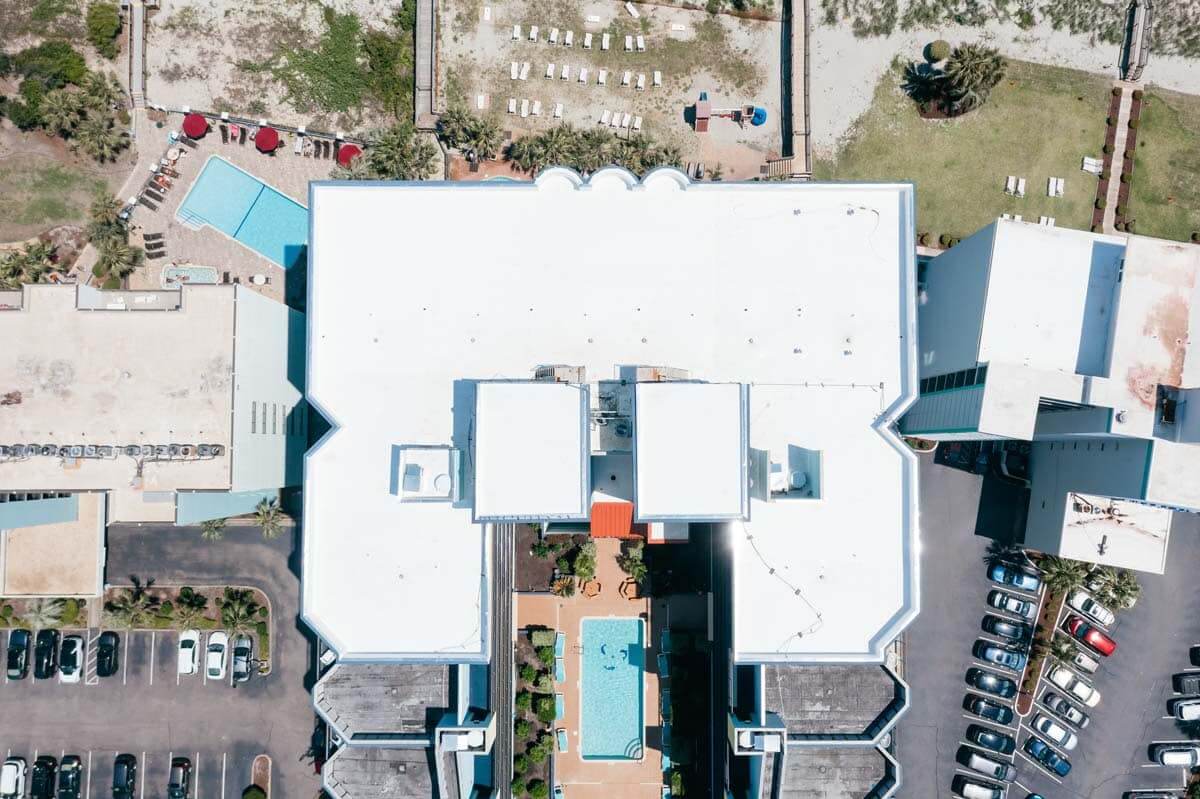
TPO’s bright white surface reflects sunlight and heat instead of absorbing it. On a hot day, that reflectivity keeps the roof surface dramatically cooler than a dark roof, which reduces the load on your air conditioning and helps maintain a more comfortable interior. For buildings in warm climates, the cooling savings over the life of the roof can be substantial.
That same reflectivity is why TPO is considered an environmentally responsible choice. Reflective roofs help reduce the urban heat island effect, and TPO membranes can be recycled at the end of their service life.
How Durable Is TPO Roofing?
A well-installed, well-maintained TPO roof typically lasts 20 to 30 years. The membrane is engineered to handle a wide range of conditions:
- UV and ozone resistance keeps the material from breaking down under constant sun exposure.
- Cold-weather flexibility lets the membrane expand and contract through temperature swings without cracking.
- Heat-welded seams resist the leaks that plague glued or taped seam systems.
Like any roof, TPO’s real-world lifespan depends heavily on installation quality and regular maintenance. Most commercial roofs, TPO included, should be inspected at least twice a year to catch small issues before they grow.
How Is TPO Installed?
TPO can be installed three ways, which gives contractors flexibility to match the method to the building:
- Mechanically attached, fastened with screws and plates, the most common and cost-effective approach.
- Fully adhered, glued directly to the substrate, a strong choice for high-wind areas.
- Ballasted, loose-laid and weighted with river rock, where the structure can support the extra weight.
The right method depends on your building’s structure, your local wind conditions, and your budget. For a deeper look at how these approaches compare, see our guide to installing a low slope roof.
Is TPO Cost-Effective?
TPO generally offers the best balance of upfront cost and long-term performance among commercial membranes. It costs less to install than premium membranes like PVC, its reflectivity trims cooling costs year after year, and its maintenance needs are modest. For offices, warehouses, retail centers, and most standard commercial buildings, that combination is hard to beat.
The main exception is buildings with heavy grease, chemical, or fire exposure, such as restaurants and some industrial facilities, where PVC’s added resistance justifies its higher price. Our comparison of TPO vs. PVC roofing walks through that decision in detail.
Is TPO the Right Choice for Your Building?
TPO is an excellent fit for most commercial buildings, but the honest answer is that no membrane is right for every roof. The best choice depends on your building’s structure, your climate, what happens on your rooftop, and how long you plan to hold the property. A qualified contractor should assess all of it before recommending a system, and should be able to explain the recommendation in plain terms.
That is how we approach it. For more than 110 years, Baker Roofing Company has installed and maintained TPO and other commercial roofing systems across the Southeast and Mid-Atlantic. Our crews are employee-owners, our work is self-performed rather than subcontracted, and our 29 locations across eight states mean consistent standards whether you have one building or a portfolio.
Key Takeaways
- TPO is a single-ply thermoplastic membrane with heat-welded seams that fuse into one watertight surface.
- Its white reflective surface cuts cooling costs and makes it one of the most energy-efficient commercial roofing options.
- A well-installed TPO roof lasts 20 to 30 years with twice-yearly inspections and basic maintenance.
- It offers the best cost-to-performance balance for most offices, warehouses, and retail buildings.
- Installation quality matters more than the membrane itself, so choose your contractor carefully.
Let’s Talk About Your Roof
If you are weighing TPO for your building, we would welcome the chance to take a look. We will assess your roof, walk you through your options honestly, and recommend the system that actually fits your property and your plans. That is how we have done good work since 1915, and it is how we will do it for you.
Reach out to your nearest Baker Roofing location to schedule an assessment, or explore our commercial roofing services to learn more about how we work.
Related Insights
 Industry Insights
After The Storm: What Building Owners Should Do To Check For Roof Damage After A Hurricane

After a hurricane or major storm, roof damage is one of the most common problems for building owners. Even if your roof seems to…
 Industry Insights
6 Things to Know Before Installing a Low Slope Roof
Installing a low slope commercial roof comes down to getting six things right: the slope itself, the membrane material, the layers beneath it, the…
 Industry Insights
How Do You Prepare a Commercial Roof for Hurricane Season?
Preparing a commercial roof for hurricane season comes down to a five-point walkthrough: clear every drain and scupper, inspect perimeter flashing and edge metal,…