
 BACK TO BLOG
 TPO vs. PVC Roofing: Which Is Right for Your Building?
For most commercial buildings, TPO is the more cost-effective choice, offering strong UV resistance that keeps offices, warehouses, and retail spaces cool. PVC costs more upfront but delivers superior resistance to chemicals, grease, and fire, which makes it the better fit for restaurants, manufacturing plants, and industrial facilities. The right answer comes down to what your building is exposed to every day.
If your building has a low-slope or flat roof, one of these two membranes is likely what stands between your operations and the weather. Here is how they compare, and how to decide with confidence.
What Are TPO and PVC Roofing Membranes?
A roofing membrane is the waterproof outer layer of a low-slope roof. It covers the roof deck and insulation and protects everything underneath from water, sunlight, and daily wear.
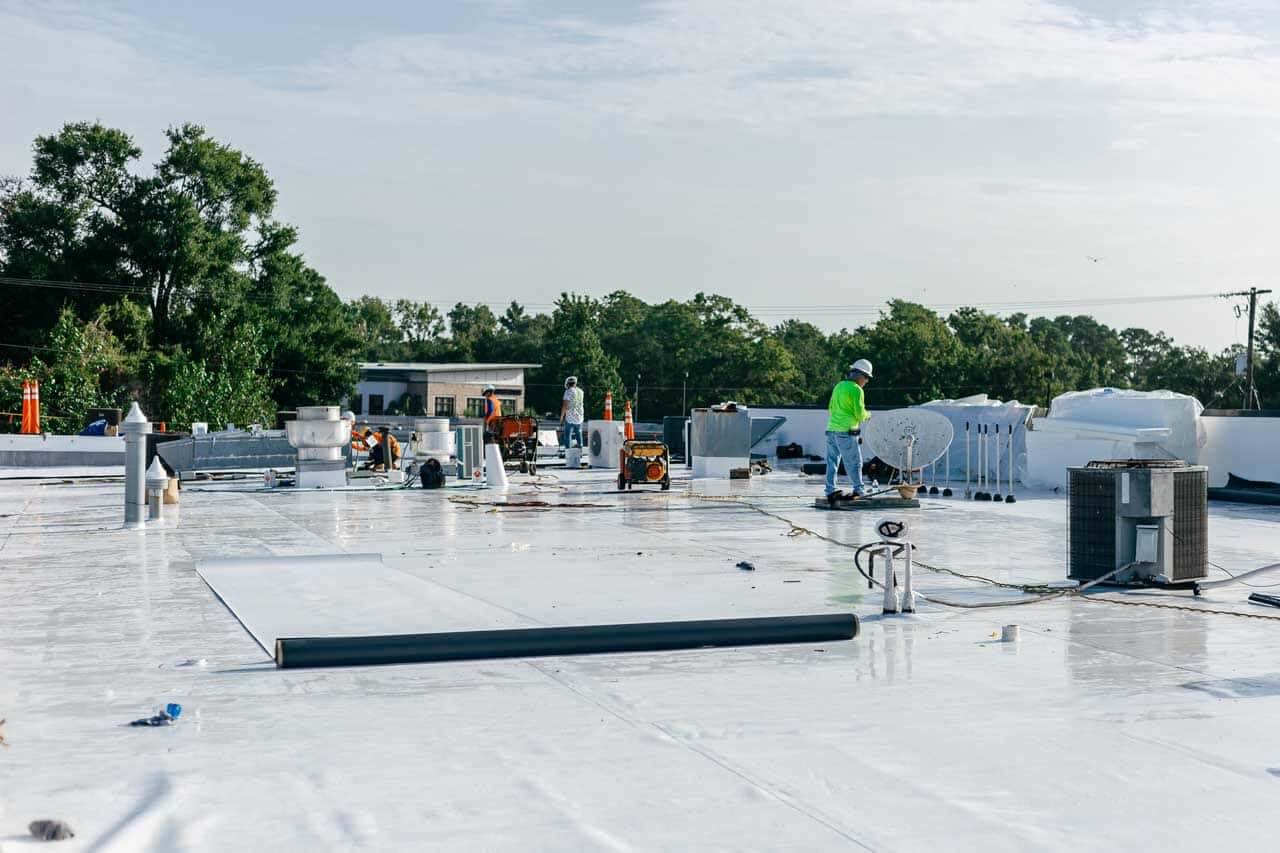
TPO and PVC are both thermoplastic membranes, a type of single-ply roofing whose seams are sealed with hot air rather than adhesives. Heat-welded seams fuse the sheets into one continuous, watertight surface, which is a major reason these systems have become the standard for commercial flat roofs. Both membranes are also highly reflective, which helps lower cooling costs in warm climates.
- TPO, or thermoplastic polyolefin, is a cost-effective membrane known for excellent UV resistance and flexibility in cold weather. It is one of the most widely installed commercial roofing systems in the country.
- PVC, or polyvinyl chloride, is a premium membrane with outstanding resistance to chemicals, grease, and fire. It is the standard choice for buildings where those exposures are part of daily operations.
One point of clarity worth noting: not every thermoplastic membrane is TPO. TPO and PVC are the two most common types, but knowing which one is actually on your roof matters for maintenance and repair decisions.
How Do TPO and PVC Compare?
Both membranes protect well when properly installed and maintained. The differences show up in cost, chemical exposure, and energy performance.
Which Costs Less: TPO or PVC?
TPO is generally the more affordable membrane. PVC carries a higher upfront cost because of the added chemical and fire resistance built into the material. For buildings that need that protection, such as a restaurant with rooftop grease vents, the higher initial investment often pays for itself by avoiding premature membrane failure and repair costs.
Which Lasts Longer: TPO or PVC?
A well-maintained TPO or PVC roof typically lasts 20 to 30 years. Lifespan depends less on the membrane itself and more on installation quality and consistent maintenance. The exception is chemical exposure: where grease, oils, or industrial chemicals regularly reach the roof, TPO deteriorates faster, and PVC is the more resilient choice.
Which Is More Energy Efficient?
Both membranes reflect sunlight far better than a traditional dark roof, which reduces the load on your cooling system. TPO tends to hold a slight edge in UV resistance over time, but for most buildings the difference between the two is modest. If energy performance is a top priority, membrane color, insulation, and installation details matter as much as the membrane type.
Which Is Easier to Install?
PVC has been on the market longer, and its installation methods are well established. TPO installation has matured considerably as the product has become the market leader. In practice, the skill and experience of the crew installing the membrane matter far more than the membrane itself. A quality membrane installed poorly will fail long before a quality membrane installed well.
Which Membrane Fits Your Type of Business?
Here is a quick reference based on the exposures each building type typically faces:
| Business Type | Better Fit |
|---|---|
| Office buildings | TPO |
| Warehouses and distribution centers | TPO |
| Restaurants | PVC |
| Manufacturing plants | PVC |
| Retail stores | TPO or PVC |
The pattern is simple: where grease, chemicals, or fire exposure are part of daily operations, PVC earns its higher price. Everywhere else, TPO’s value is hard to beat. Retail sits in the middle because it depends on the tenant mix; a shopping center with several restaurants may justify PVC where a standalone store would not.
Key Takeaways: TPO vs. PVC at a Glance
- Choose TPO for offices, warehouses, retail centers, and most standard commercial buildings, especially in sunny climates where UV resistance and cooling savings matter.
- Choose PVC for restaurants, manufacturing facilities, and any building where grease, chemicals, or fire exposure is part of daily operations.
- Both membranes last 20 to 30 years with proper installation and regular maintenance.
- Installation quality is the single biggest factor in how long either membrane performs.
How Should You Decide for Your Building?
Every building is different. The right membrane depends on your roof’s structure, your climate, what happens on and around your rooftop, and how long you plan to own the property. A qualified commercial roofing contractor can assess all of it and recommend the system that protects your investment for the long term.
That assessment is exactly the kind of work we have built our reputation on. For more than 110 years, Baker Roofing Company has installed and maintained TPO, PVC, and other commercial roofing systems across the Southeast and Mid-Atlantic. Our crews are employee-owners, our work is self-performed rather than subcontracted, and our 29 locations across eight states let us bring the same consistent standards to one building or an entire portfolio.
Let’s Find the Right Roof Together
If you are weighing TPO against PVC, we would welcome the chance to walk your roof with you. We will assess your building honestly, explain your options in plain terms, and recommend what is right for your property, not what is easiest to sell. That is how we have done business since 1915, and it is how we will do business with you.
Reach out to your nearest Baker Roofing location to schedule a roof assessment, or explore our commercial roof replacement services to learn more about what a new membrane roof involves.
Related Insights
 Roofing Insights
Why Every Brick Wall Needs Weep Holes and Through-Wall Flashing

Moisture is your building’s silent enemy. When rainwater infiltrates your brickwork or condensation gets trapped behind a window, you risk mold and mildew growth,…
 Roofing Insights
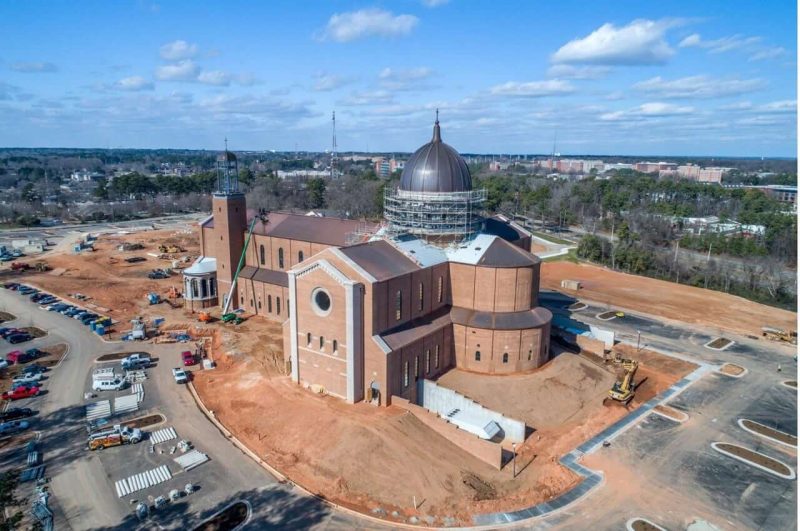
How Was the Copper Dome on Raleigh’s Holy Name of Jesus Cathedral Built?
The copper dome and roof on the Holy Name of Jesus Cathedral in West Raleigh were fabricated and installed by our crews, then the…
 Roofing Systems
Roof Coping: Everything You Need to Know
If your property has a flat roof (or even certain forms of sloped roof), a parapet wall probably sits atop it. Parapet walls are the short…