Roofing Services
Roof Repair & Maintenance
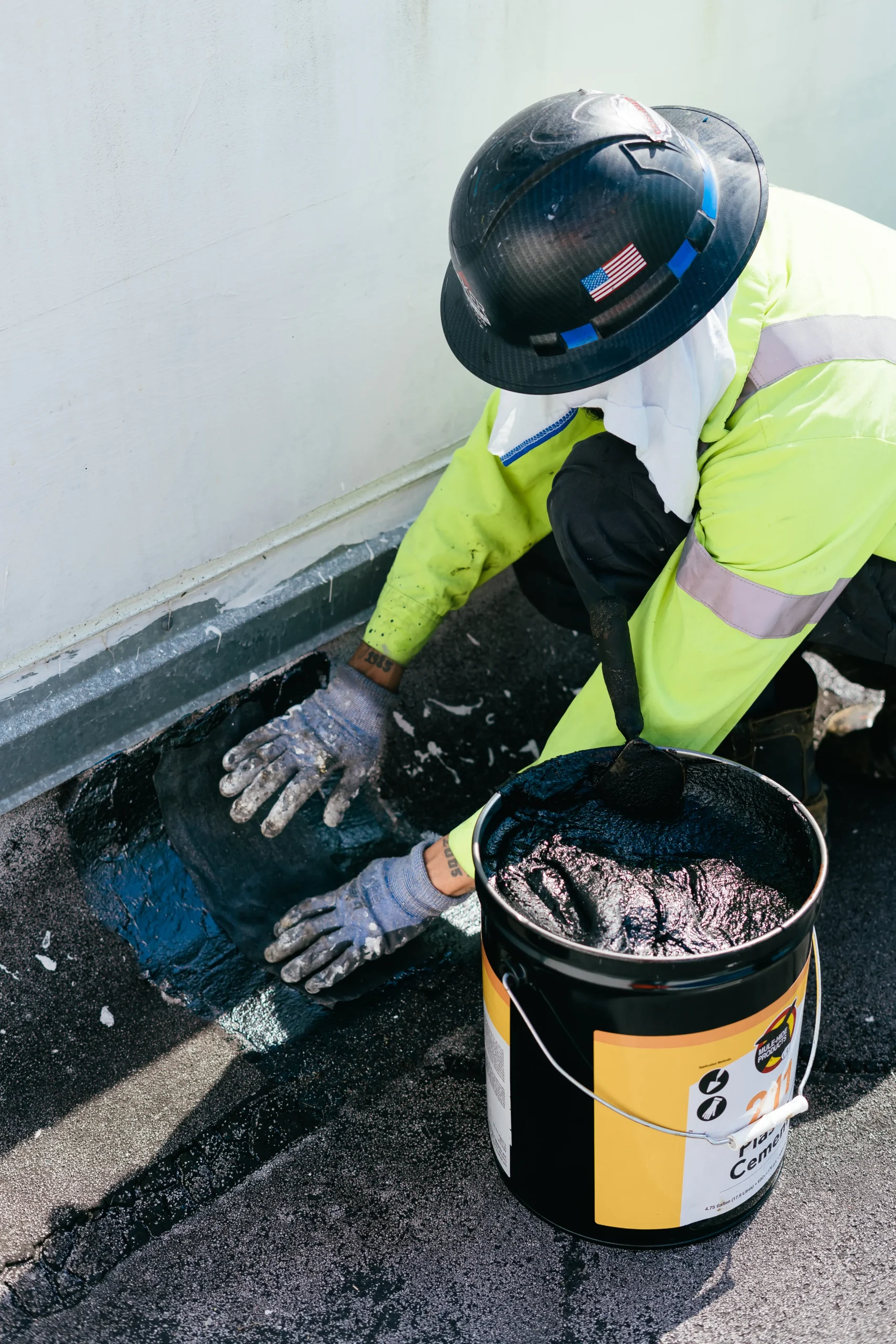
A roof repair done right the first-time costs less, lasts longer, and protects everything underneath it. Baker Roofing Company has been doing this work across the Southeast and Mid-Atlantic since 1915, and our standard hasn’t changed.
Your roof protects everything else inside. Trust the experts.
A commercial roof issue rarely stays contained to the roof itself. A leak over inventory, equipment, tenant space, or production areas can quickly become an operational problem. Baker Roofing Company has been responding to commercial roof repairs for more than a century. Our self-performed crews work across every major roofing system, from TPO and EPDM membranes to built-up, modified bitumen, and metal roofing, identifying the cause of the problem and repairing it correctly the first time. Because our repairs are self-performed, the responsibility for diagnosing the issue and completing the work stays with Baker Roofing from start to finish.
Services
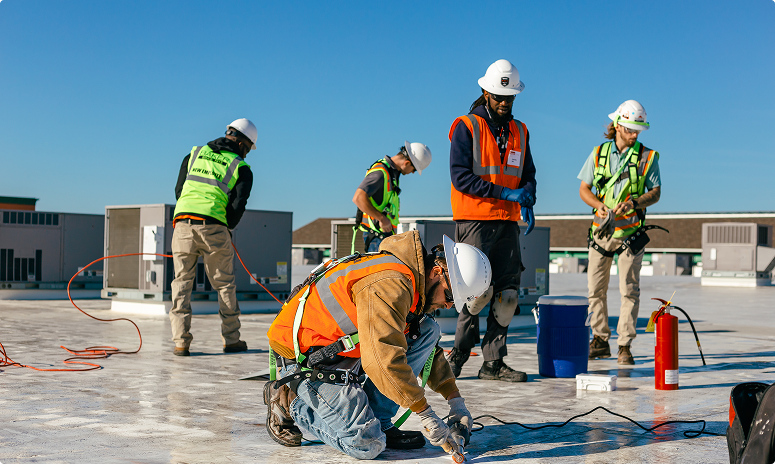
Not all roof damage is visible from the ground, and not all damage that looks minor actually is. Baker Roofing performs thorough assessments before recommending a repair approach, giving you an honest picture of what you’re dealing with and what it will take to resolve it. We follow NRCA guidelines on every repair, and we only warrant work that meets the standard for a long-term fix.
- Comprehensive roof assessment before any work begins
- Repairs performed by trained, uniformed Baker Roofing employees
- Before-and-after documentation provided on every project
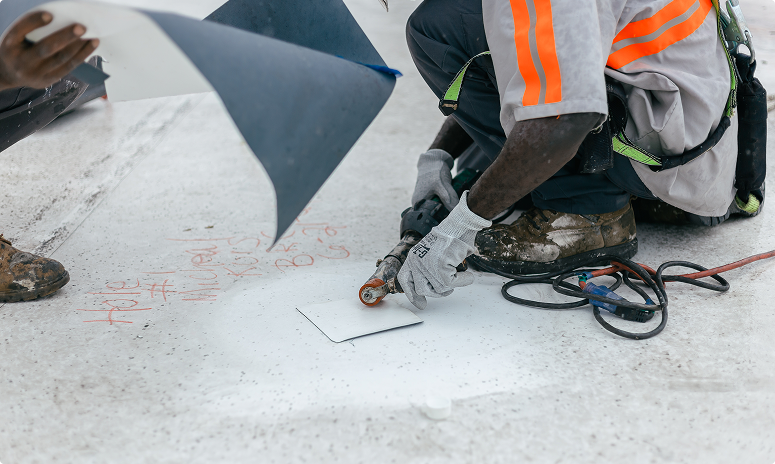
A water stain on the ceiling and the point where a roof is actually leaking are rarely in the same place. Pinpointing the true source of a commercial roof leak requires systematic investigation, not guesswork. Our teams use a combination of visual inspection, physical core testing, and moisture detection tools to locate the problem accurately before any repair work begins. That process saves you money and prevents recurring issues.
- Multi-method leak investigation including physical inspection and moisture detection
- Core testing to identify moisture infiltration in the assembly
- Repair scope scoped to the confirmed source, not the symptom
- Water testing used to verify repairs before close-out
A roof failure during a storm, an unexpected leak over critical equipment, or sudden membrane damage doesn’t follow a convenient schedule. Our emergency response teams are positioned across 29 locations throughout the Southeast and Mid-Atlantic, which means when you call, a Baker Roofing crew is close. We mobilize quickly, assess accurately, and implement solutions that protect your building and your operations while a permanent repair is planned.
- Emergency response available across 29 regional locations
- Rapid deployment to protect building interiors and contents
- Temporary and permanent repair solutions clearly communicated upfront
A roofing warranty is only as good as the contractor who backs it. Baker Roofing handles warranty service with the same urgency and professionalism as any other repair call. Whether you have a manufacturer warranty, a workmanship warranty, or both, our teams are equipped to assess warranty claims, perform qualifying repairs, and document the work to maintain your coverage. As a 100% employee-owned company, standing behind our work isn’t just a policy. It’s personal.
- Warranty assessment and repair performed by Baker Roofing crews
- Documentation provided to support manufacturer warranty compliance
- Workmanship warranty backed by a company with 110 years of accountability
Commercial roofs that receive regular maintenance last longer, perform better, and cost significantly less over their lifetime than those addressed only when something goes wrong. Baker Roofing’s preventative maintenance programs are built around scheduled inspections, documented condition reporting, and targeted repairs that address developing issues before they become emergencies. For property managers and multi-location operators, we offer maintenance contracts that cover your entire portfolio under a single, consistent program.
- Scheduled inspections with detailed written and photographic documentation
- Prioritized repair recommendations based on urgency and condition
- Multi-year capital planning support for repair and replacement decisions
Projects
See All Projects

Other Roofing Services
BAKER NATIONAL ACCOUNTS PROGRAM
No matter how many locations you manage, one point of contact changes everything. That’s what Baker National Accounts was built for.
Managing roofing across multiple locations means coordinating vendors, chasing down service records, and hoping quality holds from one market to the next. We built our national accounts program to remove all of that. One relationship, one standard, all locations doing the same work the same way, everywhere you need us.
Learn how we can help