
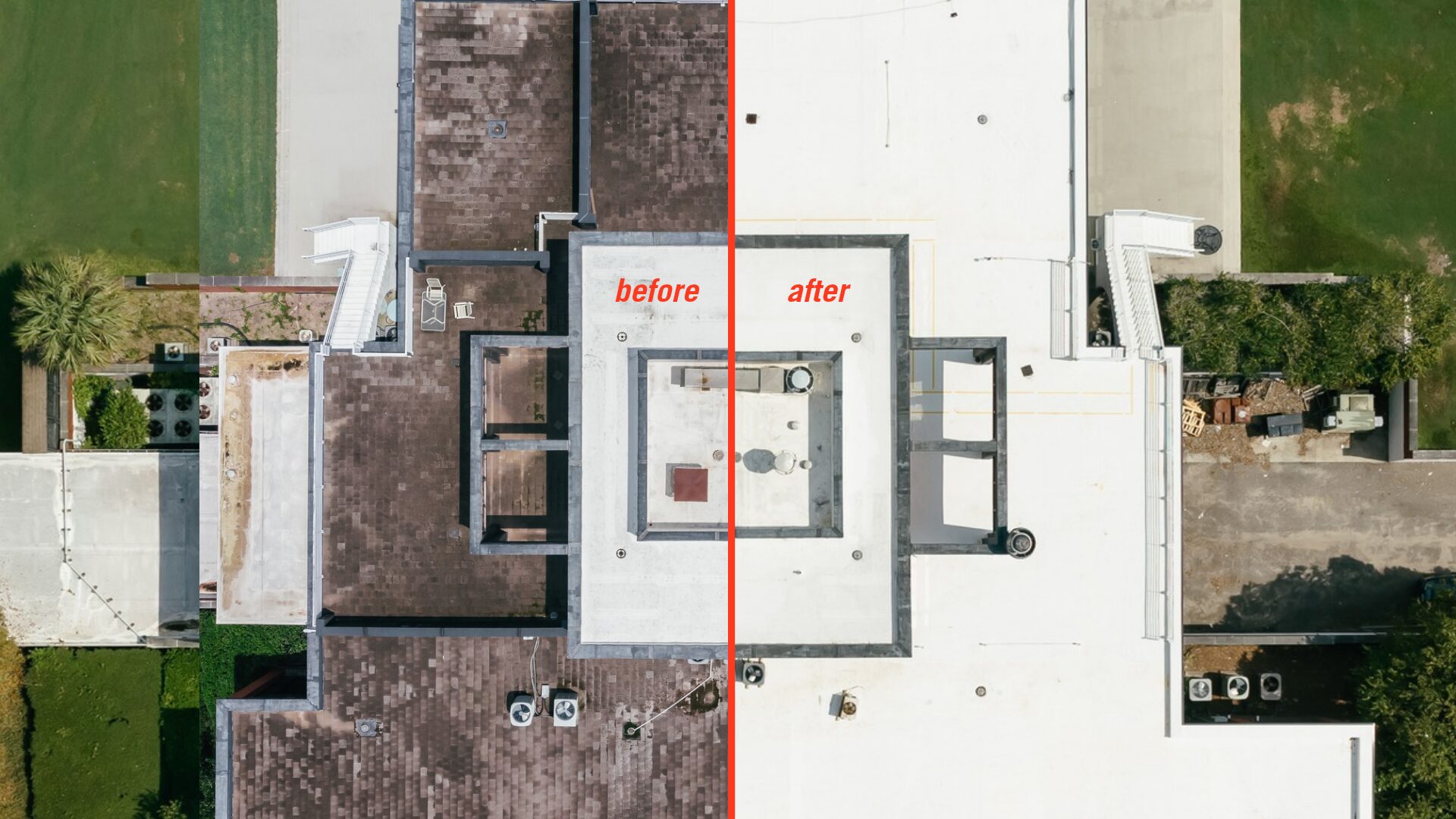
 BACK TO BLOG
Repair, Restore, or Replace Your Commercial Roof?
Repair your commercial roof when problems are isolated, restore it when the roof is aging but still mostly dry, and replace it when damage is widespread or the insulation is saturated. The right choice depends on the roof’s age, its condition below the surface, and how long you plan to own the building. Choosing correctly can save a significant share of your capital budget.
We help owners make this decision every budget season. Here is how to think it through.
A Quick Note on Terms
A repair fixes a specific problem, like a leak, a split seam, or damaged flashing. A restoration renews the surface of a sound roof, usually with a fluid-applied coating, to extend its life. A replacement, also called a reroof, removes the existing roof and installs a new system. A recover is a type of replacement that installs a new roof over one existing roof instead of tearing it off.
How Do Repair, Restoration, and Replacement Compare?
Repair costs the least up front, replacement costs the most, and restoration usually falls in between while adding meaningful years of life.
| Option | Best when | Typical cost range* | Years of life added | Disruption to operations |
|---|---|---|---|---|
| Repair | Damage is isolated and the roof is otherwise sound | A few hundred to several thousand dollars per repair | Keeps the roof performing; does not reset its age | Minimal |
| Restoration | The roof is aging but mostly dry, with sound seams and insulation | Roughly $2 to $6 per square foot | Often 10 to 20 years, depending on the system | Low; usually no tear-off |
| Replacement | Damage is widespread, insulation is wet, or the roof is past its service life | Roughly $7 to $15+ per square foot | A full new service life, often 20 to 30+ years | Moderate to high |
*General ranges for planning only. Actual costs vary with roof size, access, system, tear-off needs, and local conditions.
When Is a Commercial Roof Repair Enough?
A repair is enough when the problem is limited to one area and the rest of the roof is in good condition. Common examples include a punctured membrane, a single failed seam, or loose flashing around one rooftop unit. If you are calling for leak repairs in different areas every year, that pattern usually means it is time to look at restoration or replacement.
When Does Roof Restoration Make Sense?
Restoration makes sense when a roof is showing its age on the surface but the membrane, seams, and insulation underneath are still largely sound. Many contractors use roughly 25 percent wet insulation as a general limit: above that, restoration is rarely a good investment. A moisture survey tells you where your roof stands before you commit.
Restoration can also carry practical benefits:
- No tear-off, so less noise, waste, and disruption to tenants
- Reflective coatings can lower rooftop temperatures and cooling loads
- Many restoration systems can be renewed with a future recoat
When Is It Time to Replace a Commercial Roof?
It is time to replace a commercial roof when the damage is widespread, the insulation is saturated, or repair costs keep rising year after year. Replacement is also the right call when a roof is well past its expected lifespan or when the building’s use has changed in ways the old roof cannot support, like new rooftop equipment or solar.
Can You Install a New Roof Over the Old One?
A new roof can sometimes be installed over an existing roof, called a recover, if there is only one roof layer in place and the existing roof and insulation are dry. Building codes generally limit roofs to two layers, and a recover over wet materials traps moisture that shortens the new roof’s life. A recover can reduce cost and disruption when conditions allow it.
How Do You Plan Roof Spending Over Several Years?
The most reliable way to plan roof spending is to inspect each roof, document its condition, and build a three- to five-year plan that sequences repairs, restorations, and replacements. This turns emergency spending into predictable capital planning, which matters most for owners with multiple buildings.
Key Takeaways
- Repair isolated problems, restore aging roofs that are still dry, and replace roofs with widespread damage or wet insulation.
- Restoration typically costs less than replacement and can add 10 to 20 years of life.
- Roughly 25 percent wet insulation is a common guideline for when restoration no longer makes sense.
- A recover can go over one existing roof layer if the old roof is dry and sound.
- A multi-year roof plan turns surprise costs into predictable budgets.
Frequently Asked Questions
Is it cheaper to repair or replace a commercial roof? Repairing a commercial roof is cheaper in the short term, but frequent repairs on an aging roof can cost more over time than restoration or replacement.
How long does a roof restoration last? A commercial roof restoration typically lasts 10 to 20 years, depending on the coating type, thickness, and the condition of the roof underneath.
How do I know if my roof insulation is wet? Wet roof insulation is usually found with an infrared or moisture survey, sometimes confirmed with small core samples taken from the roof.
Can a commercial roof be restored more than once? Many restoration systems can be recoated at the end of their service life, as long as the roof underneath remains dry and sound.
Let’s Find the Right Answer for Your Roof
The right choice is the one that fits your building, your budget, and your plans for the property. Because our own crews perform every repair, restoration, and replacement, our recommendation is never shaped by what a subcontractor wants to sell.
As a 100% employee-owned company, we are here for the long term, and we would rather earn your trust over decades than make a sale today. Let’s take a look at your roof and build a plan that lasts.
Related Insights
 Roof Replacement & Reroofing
Commercial Property Owners: How to Prepare your Business or Facility for a Hurricane

It is important to stay aware during hurricane season. Baker Roofing wants to help equip you with tools to keep your business dry during…
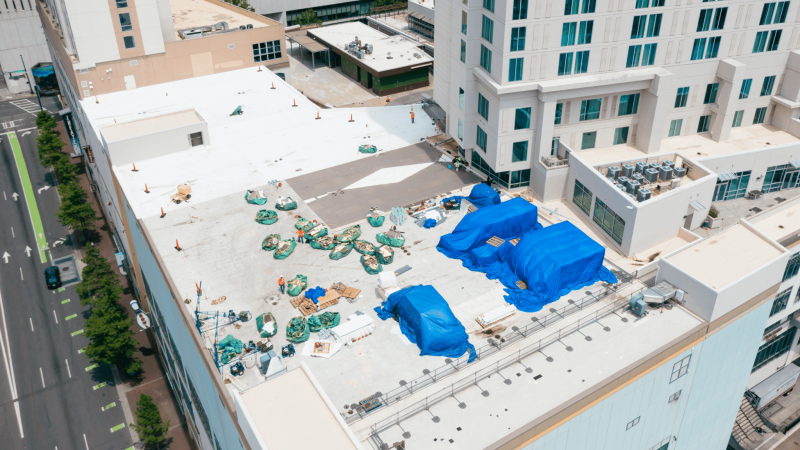 Industry Insights
Should You Repair or Replace Your Commercial Roof?
Repair your commercial roof when problems are isolated and the membrane still has years of useful life. Replace it when deterioration is widespread, the…
 Roofing Insights
Donating a Roof to Ronald McDonald House Charleston
Through our membership in the Roofing Alliance and its partnership with Ronald McDonald House Charities, our Charleston team donated $60,000 in labor to install…