
 BACK TO BLOG
What to Check on a Commercial Roof After a Major Storm
What to Check on a Commercial Roof After a Major Storm
After a major storm, check your commercial roof for punctures, lifted edges, displaced flashing, clogged drains, and damaged rooftop equipment, then look inside for new leaks or ceiling stains. Start from the ground and the building interior, and leave the roof itself to trained professionals until it is safe. Document everything with dated photos, because that record supports any insurance claim.
Our crews respond to storm damage across the Southeast and Mid-Atlantic every hurricane season. Here is the checklist we use and what each item tells you.
A Quick Note on Terms
Storm damage on a commercial roof usually falls into three types. Wind damage is lifting, tearing, or blow-off of roofing materials. Hail damage is bruising, cracking, or punctures from impact. Water damage is moisture that gets into the insulation or the building through any opening the storm created.
Is It Safe to Go on the Roof After a Storm?
It is usually not safe to walk a commercial roof right after a storm. Wet membranes are slippery, debris can hide holes, and damaged decks or downed power lines create serious hazards. Start with a ground-level and interior check, and let a trained roofing crew with proper fall protection handle the rooftop inspection.
What Should You Check From the Ground and Inside?
A ground and interior check shows most major storm damage without anyone climbing onto the roof.
- Perimeter and edges. Look for bent or missing edge metal, coping, or gutters.
- Visible membrane. Look for flapping, bubbling, or torn sections, especially at corners where wind pressure is highest.
- Rooftop equipment. Check whether HVAC units, vents, or solar panels have shifted or been knocked over.
- Downspouts and scuppers. Confirm water is flowing out, not backing up.
- Ceilings and walls. Look for new stains, drips, sagging ceiling tiles, or damp insulation.
- Top-floor spaces. Check around skylights, roof hatches, and exterior walls for water entry.
What Will a Professional Rooftop Inspection Look For?
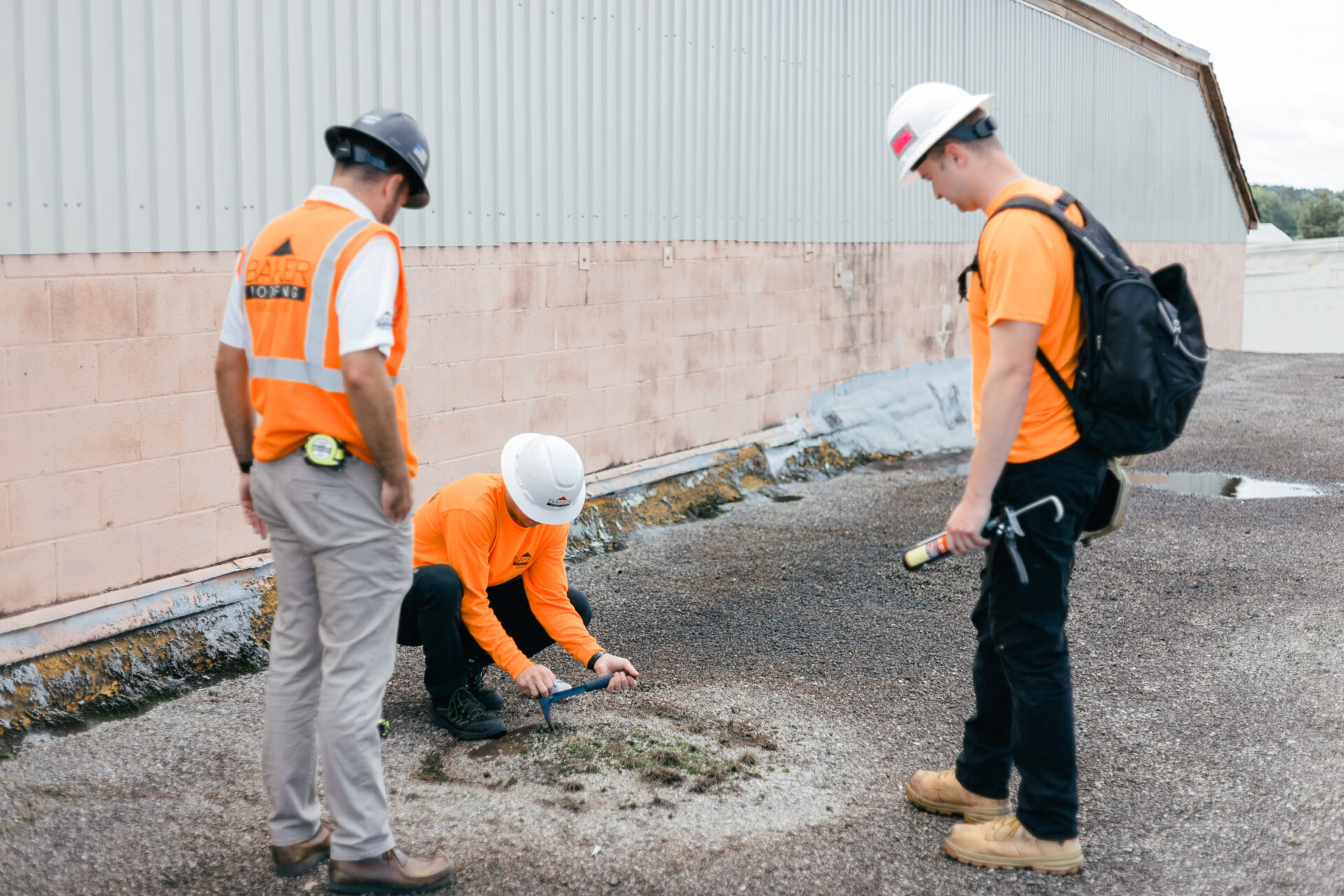
A professional storm inspection looks for damage that is easy to miss from below, including:
- Punctures and tears from flying debris
- Seams that have separated or been stressed by wind uplift
- Loose or displaced flashing around walls, curbs, and penetrations
- Hail bruising on membranes and dents on metal components
- Clogged drains and debris that can cause ponding water
- Wet insulation, often found with infrared or moisture scanning
Hail and wind damage are not always visible right away. A membrane can look intact while the seams or insulation beneath it have been compromised, which is why a close inspection within days of the storm matters.
How Should You Document Storm Damage for Insurance?
Document storm damage with dated photos and video of every affected area, inside and out, before any repairs begin. Keep a written log of what you found, when you found it, and any temporary steps you took to prevent further damage. Most policies expect owners to take reasonable steps to limit further damage, and claim deadlines vary by policy, so review your coverage early.
Should You Make Temporary Repairs Right Away?
Temporary repairs are often worth making right away when water is actively entering the building. Emergency measures like tarping, sealing punctures, or clearing drains can prevent interior damage from spreading. Have a qualified roofing contractor handle them, and keep receipts and photos, since temporary repairs are usually part of the claim record.
Key Takeaways
- Check your roof from the ground and inside the building first; leave rooftop work to trained crews.
- The most common storm damage points are edges, corners, seams, flashing, drains, and rooftop equipment.
- Hail and wind damage can be hidden, so schedule a professional inspection within days.
- Photograph and log everything before repairs begin to support an insurance claim.
- Temporary repairs that stop active leaks protect your building and are part of the claim record.
Frequently Asked Questions
How soon should a commercial roof be inspected after a storm? A commercial roof should be inspected as soon as it is safe, ideally within a few days of the storm, so hidden damage is found before it leads to leaks.
Can hail damage a commercial roof without visible signs? Yes. Hail can bruise membranes, crack seams, or crush insulation without leaving obvious surface damage, which is why professional inspections matter after hailstorms.
What part of a commercial roof is most vulnerable to wind? The corners and perimeter of a commercial roof experience the highest wind uplift pressure, so edges, coping, and corner membranes are the most common failure points.
Does insurance cover storm damage to a commercial roof? Many commercial policies cover sudden storm damage, but coverage, deductibles, and deadlines vary. Review your policy and document damage thoroughly.
When the Storm Passes, We Show Up
Storm damage is stressful, especially when you are responsible for one building or a hundred. Our emergency response crews are our own employees, trained to the same standards in all of our 25+ locations, so the team that shows up after a storm knows exactly what to look for.
As a 100% employee-owned company, we treat your building the way we would treat our own. If a storm has passed through your area, let’s assess the damage together and get your roof protected.
Related Insights
 Roofing Insights
5 Key Roof Components to Inspect After a Storm on Commercial Roofs

Protect Your Building with a Thorough Roof Inspection & Trustworthy Repair Services A flat commercial roof is a vital component of any building, providing…
 Industry Insights
Should You Repair or Replace Your Commercial Roof?
Repair your commercial roof when problems are isolated and the membrane still has years of useful life. Replace it when deterioration is widespread, the…
 Industry Insights
Flat Roof Skylights: A Design and Maintenance Guide
A flat roof skylight is a roof window designed to bring natural light into buildings with flat or low slope roofing systems. Installed either…