
 BACK TO BLOG
 What Drives Commercial Roof Repair Costs?
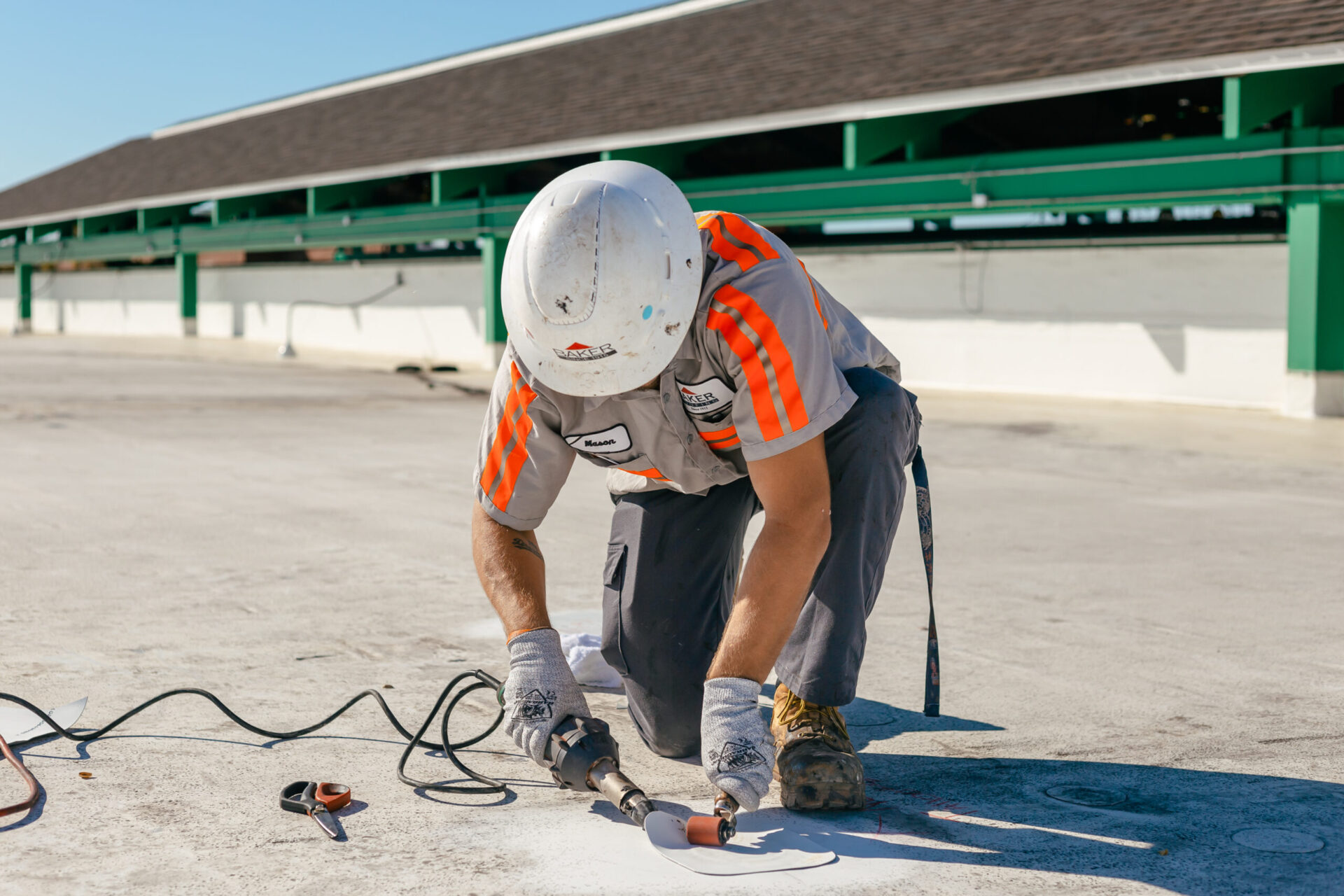
mercial roof repair costs generally come down to four things: the type and extent of the damage, the roofing system involved, how difficult the roof is to access, and how quickly the repair needs to happen. A small, easily reached leak on a standard TPO roof will cost far less to fix than storm damage on a complex, multi-level system with restricted access.
There is no single number that applies to every building, and any contractor who quotes one without seeing your roof is guessing. What we can offer is clarity on what actually moves the price, so you can budget with confidence and ask the right questions when you get a quote.
What Type of Damage Are You Repairing?
The nature of the damage is usually the biggest factor in the estimate.
- Isolated leaks or punctures. A single seam failure or puncture is typically the least expensive repair, since the damaged area is small and clearly defined.
- Ponding water or drainage issues. These often require more than a patch. Correcting the slope or adding drainage adds labor and materials.
- Storm or wind damage. High winds can lift membrane, damage flashing, or expose insulation across a wide area, which raises both material and labor costs.
- Widespread wear. An older roof nearing the end of its service life may need repairs in several locations at once, which can approach the cost of a full assessment for replacement.
A thorough inspection before any work begins helps confirm which of these you are actually dealing with, since surface symptoms do not always match the underlying cause.
Does Your Roofing System Affect the Price?
Yes, and significantly. Different systems require different materials, tools, and expertise.
- TPO (thermoplastic polyolefin): a single-ply membrane known for energy efficiency and heat-welded seams, generally among the more straightforward systems to repair.
- EPDM (rubber membrane): durable and weather-resistant, with repairs that typically involve specialized adhesives or seam tape.
- BUR (built-up roofing): a traditional multi-layer system that can require more labor to repair correctly, since each layer needs to be addressed.
- Modified bitumen: an asphalt-based system that often requires heat-application equipment for a proper repair.
- Metal, tile, and other steep-slope systems: repair costs vary widely depending on the material and the complexity of the roof design.
Knowing your system, and having a contractor who is genuinely experienced with it, protects you from repairs that look complete but fail early.
How Much Does Roof Access Matter?
A roof that is easy to reach costs less to work on than one that is not, all else being equal.
- Building height affects equipment needs. Taller commercial buildings may require lifts or additional safety measures.
- Rooftop obstructions, like HVAC units, solar arrays, or satellite equipment, can slow down the work and require extra care around existing systems.
- Number of buildings or roof sections matters for portfolio owners. Coordinating repairs across multiple properties has its own logistics, even when each individual repair is small.
This is one of the reasons a phone estimate is rarely accurate. Access conditions are almost always easier to judge in person.
Does Timing Change the Cost?
Yes. Emergency repairs, like an active leak during a storm, are typically more expensive than planned maintenance work scheduled in advance. Mobilizing a crew quickly, often outside normal hours, takes more resources than a repair that is scheduled with lead time.
This is part of why a regular inspection and maintenance program is worth the investment. Catching small issues early almost always costs less than responding after they become emergencies.
Key Takeaways
- Damage type, roofing system, roof access, and timing are the main drivers of commercial roof repair cost.
- Isolated damage on an accessible, standard system is generally the least expensive scenario.
- Storm damage, drainage corrections, and repairs to complex or aging systems typically cost more.
- Emergency repairs cost more than planned maintenance, which is one reason regular inspections pay off over time.
- An accurate estimate requires an in-person inspection. Anything else is a rough guess.
A Straightforward Estimate, Not a Guessing Game
We have been doing this work since 1915, and one thing has not changed: we believe you deserve a straightforward answer about what your roof needs and what it will cost to fix it right. As a 100% employee-owned company, the people inspecting your roof and writing your estimate are personally invested in getting it right, because they own the outcome too.
We self-perform our repair work with our own crews across [service area / states], so the team that inspects your roof is the same team that fixes it. No subcontractors, no guesswork passed down the line.
If you are dealing with a leak, storm damage, or a roof that just is not aging the way it should, let’s take a look and build a clear plan together.
How We Provide Detailed Estimates Before Repair Work
Yes. Every commercial roof repair starts with a detailed, written estimate before any work begins. You will know the scope of the problem, the recommended repair, and the cost, in writing, before you approve anything. No repair work starts on a guess, and no invoice should ever surprise you.
For a business owner or property manager, that is often the real question behind the question: can I trust what I am being told before I commit any budget? Here is exactly how the process works, so there is no ambiguity going in.
Step 1: We Inspect the Roof in Person
An accurate estimate starts with an accurate look at the actual problem. One of our team members inspects the roof directly, checking the reported issue as well as the surrounding area, since roof problems do not always stay where they started.
- We document what we find with photos.
- We identify the roofing system involved (TPO, EPDM, BUR, modified bitumen, metal, or another material) since that affects both the repair method and the cost.
- We check for related issues, like drainage problems or aging materials nearby, that could affect the repair or resurface soon after.
A phone call or a photo you send us can help us prepare, but it cannot replace an in-person inspection for anything beyond a rough ballpark.
Step 2: We Put the Scope in Writing
Once we know what the roof needs, we write it down clearly. Your estimate should tell you:
- What is damaged, described in plain language, not just technical shorthand.
- What repair is recommended, and why that approach fits your roof and your building’s use.
- What materials will be used.
- What the total cost will be, broken down so you can see what you are paying for.
- How long the work is expected to take.
If a term needs explaining, like why a BUR (built-up roofing) repair takes longer than a single-ply patch, we explain it in the estimate itself. You should not need a translator to understand your own roof.
Step 3: We Answer Your Questions Before You Approve Anything
An estimate is not a take-it-or-leave-it document. Before any work begins, you have the chance to ask questions, request adjustments, or get a second opinion. We would rather spend extra time answering questions upfront than have you feel rushed into a decision about your building.
This step matters most for larger repairs or when multiple properties are involved. If you manage a portfolio, you may want the same clarity across several buildings at once, and we will walk through each one the same way.
Step 4: You Approve, Then We Schedule
Work is scheduled only after you approve the estimate. Nothing changes about the scope or price without your sign-off first. If conditions change once we start, for example if we find additional damage once we open up the roof, we stop and communicate with you before proceeding, rather than expanding the job and the bill without your knowledge.
Key Takeaways
- Every repair begins with a written, itemized estimate, not a verbal ballpark.
- The estimate is based on an in-person inspection, not just a phone description or photos alone.
- You will see the scope, materials, cost, and timeline in writing before approving anything.
- You have the chance to ask questions before you commit.
- Nothing changes about the price or scope without your approval, even if new issues come up mid-repair.
A Process Built to Earn Your Trust, Not Just Your Business
We have been doing good work since 1915, and part of doing it right is making sure you never have to wonder what you are paying for or why. As a 100% employee-owned company, the person writing your estimate has a direct stake in getting it right, because their name and their ownership are both attached to the outcome.
We self-perform our repair work with our own crews, so the same team that inspects your roof and writes your estimate is the team that completes the work. That consistency is part of how we keep estimates accurate and repairs on track.
If you have a repair that needs a clear, honest estimate, let’s take a look and put it in writing.
Related Insights
 Roofing Insights
5 Key Roof Components to Inspect After a Storm on Commercial Roofs

Protect Your Building with a Thorough Roof Inspection & Trustworthy Repair Services A flat commercial roof is a vital component of any building, providing…
 Industry Insights
Should You Repair or Replace Your Commercial Roof?
Repair your commercial roof when problems are isolated and the membrane still has years of useful life. Replace it when deterioration is widespread, the…
 Industry Insights
Flat Roof Skylights: A Design and Maintenance Guide
A flat roof skylight is a roof window designed to bring natural light into buildings with flat or low slope roofing systems. Installed either…